


Synergistic Research
MiG 4.0
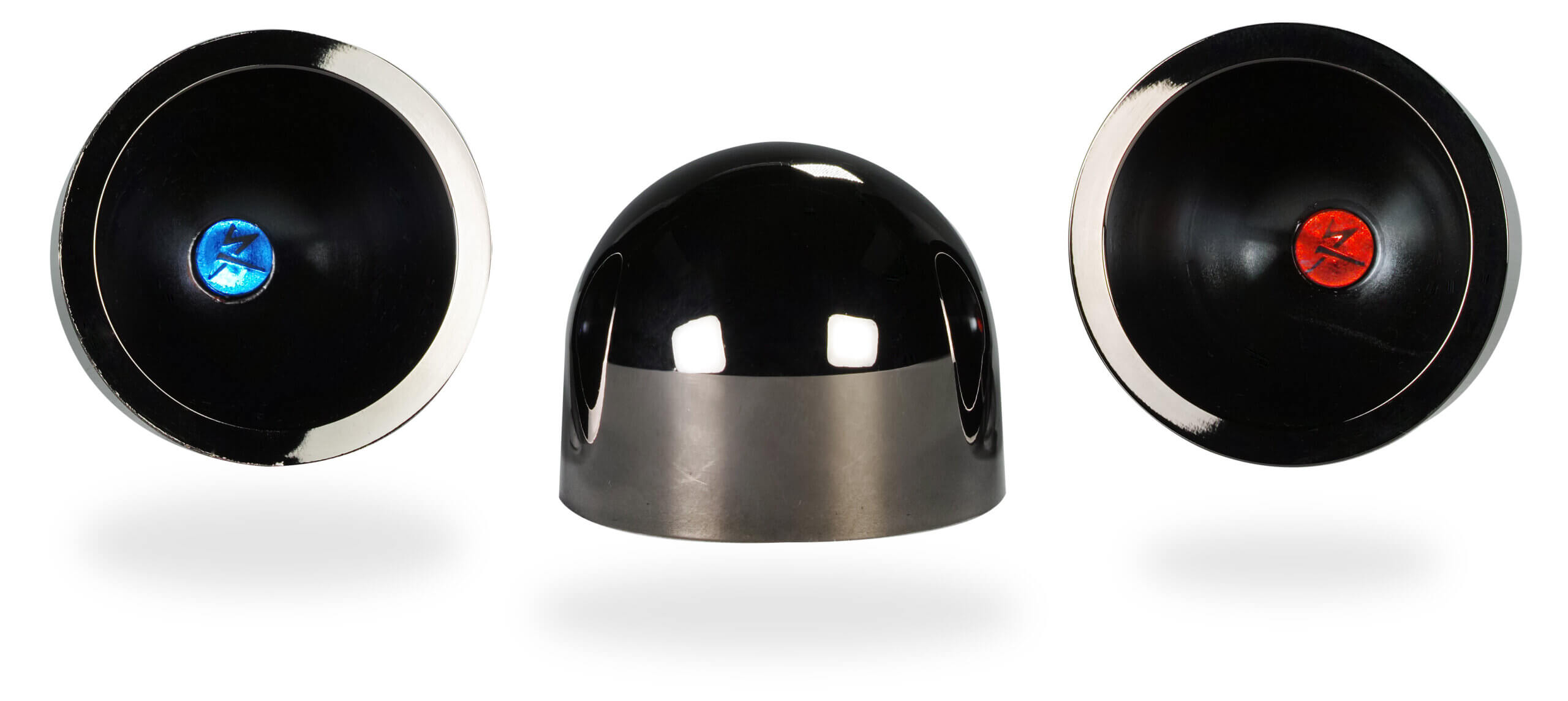
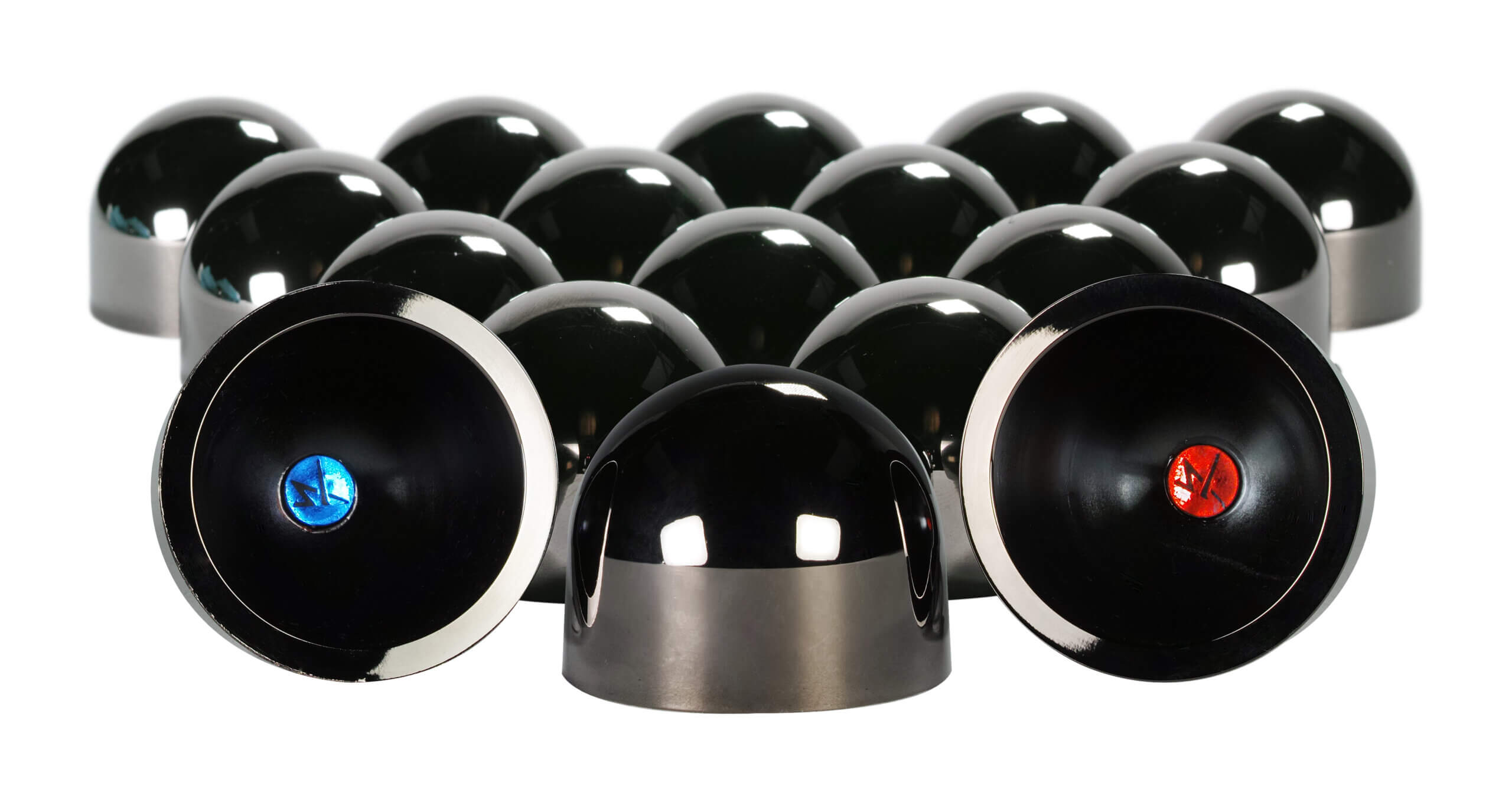
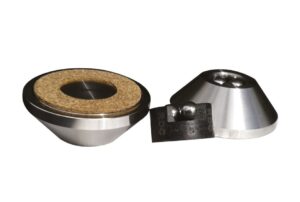
Set of 3 footers
Incl. 21 % TAX € 325.00
- Mechanical Interface Grounding component footers
- Easy to install and highly effective
- Voiced for the LogiQ and the FEQ
- Comes as a set of 3 different formulations
- High-carbon steel resonator with variable wall thickness
- Weight 82 g
- Size Ø42×26 mm
The next evolution in mechanical energy management.
The MiG 4.0 (Mechanical Interface Ground) represents a major advance in the science of component coupling. Building on fifteen years of innovation—from the original 2008 MiG to the industry-benchmark MiG SX—the MiG 4.0 is no longer just an isolation footer. It is a resonance engine designed to integrate your components into a singular, coherent field ecology.
While traditional footers attempt to “isolate” (often deadening the music), MiG 4.0 governs the flow of energy. By leveraging a precision CNC-machined resonance chamber, MiG 4.0 captures mechanical chaos and converts it into a control vector for your system’s holographic realism.
Inside the Design
The Architecture of Silence
Strategic High Carbon Steel Resonators
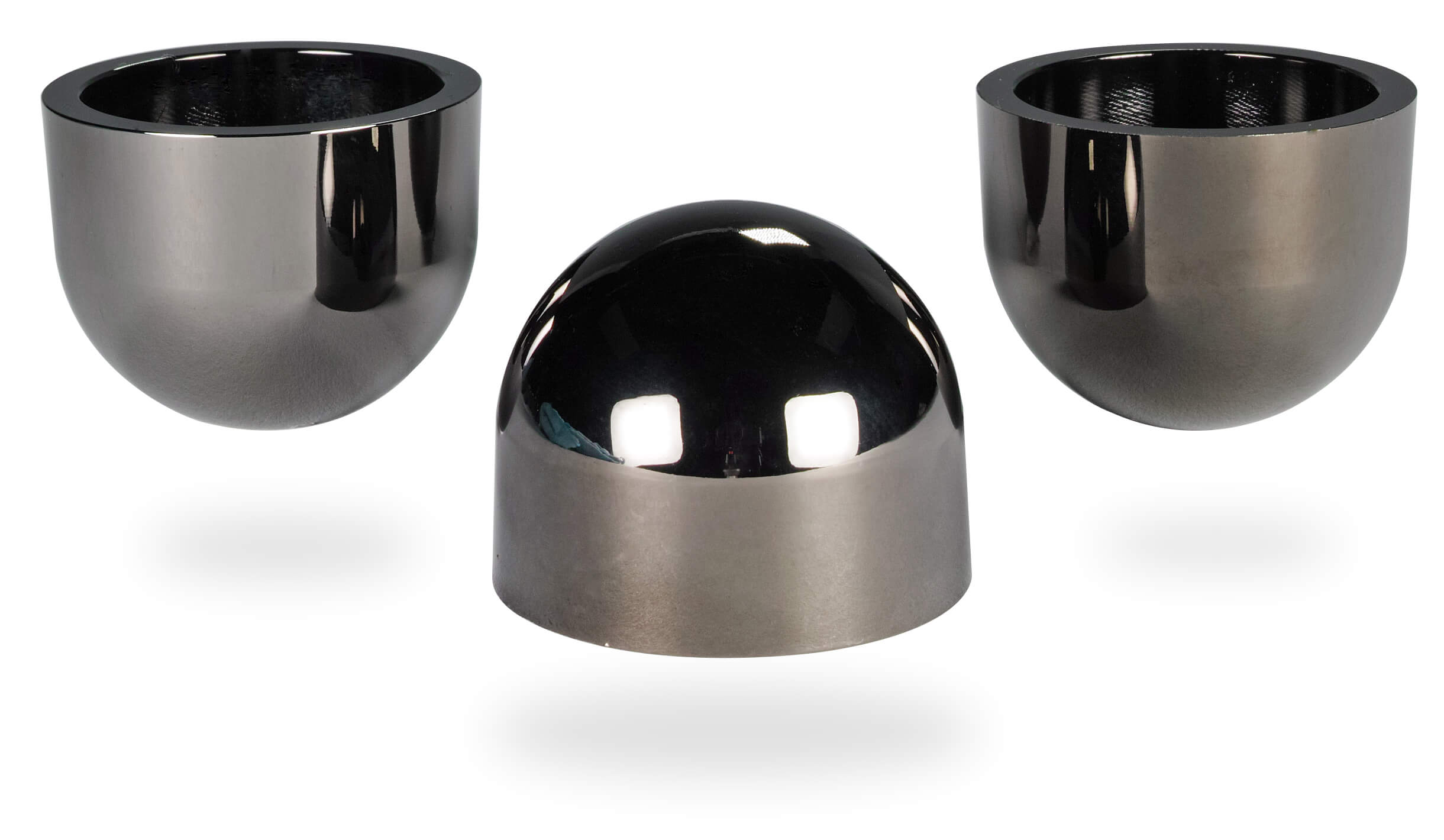
Unlike the uniform forged domes of the past, MiG 4.0 features a high-carbon steel resonator with varied wall thickness. Through extensive testing, Synergistic Research has mapped how energy propagates through this geometry. By strategically thinning and thickening specific regions of the resonator, the propagation and exit-velocity of mechanical energy is controlled.
Result: an audible leap in image density, low-level detail, and temporal accuracy.
The Triad Strategy
In a world-first for mechanical footers, a set of three MiG SRX is not three identical units. SR moved beyond a “universal” solution to a Strategic Triad.
Each footer in a set of three contains a distinct, next-generation UEF Metamaterial formulation, voiced to address a specific performance vector:
Footer Alpha – Engineered for holographic realism and soundstage density
Footer Beta – Optimized for low-frequency impact, structural drive, and bass authority
Footer Gamma – Dedicated to HF air, extension, and top-end liquidity
By deploying these three formulations together, MiG SRX achieves a balance of slam and refinement that a single, do-everything material could never replicate.
Field Integration: The LogiQ & FEQ Connection
MiG 4.0 is voiced to operate in synergy with the FEQ Carbon and upcoming LogiQ ELF / ULF field generators. The resonance engine is tuned to track the same ultra-low-frequency bias used across the Synergistic Research ecosystem.
This turns your component’s mechanical footprint into an intentional part of the system’s overall field architecture, rather than an unmanaged source of vibration and RF interaction.
Master Your Sound
Dual Tuning Options
MiG 4.0 remains a versatile tuning tool, offering two distinct sonic profiles based on orientation.
| Pinpoint setup (Focus & Articulation) |
Ambient setup (Scale & Liquidity) |
|
 |
………. | 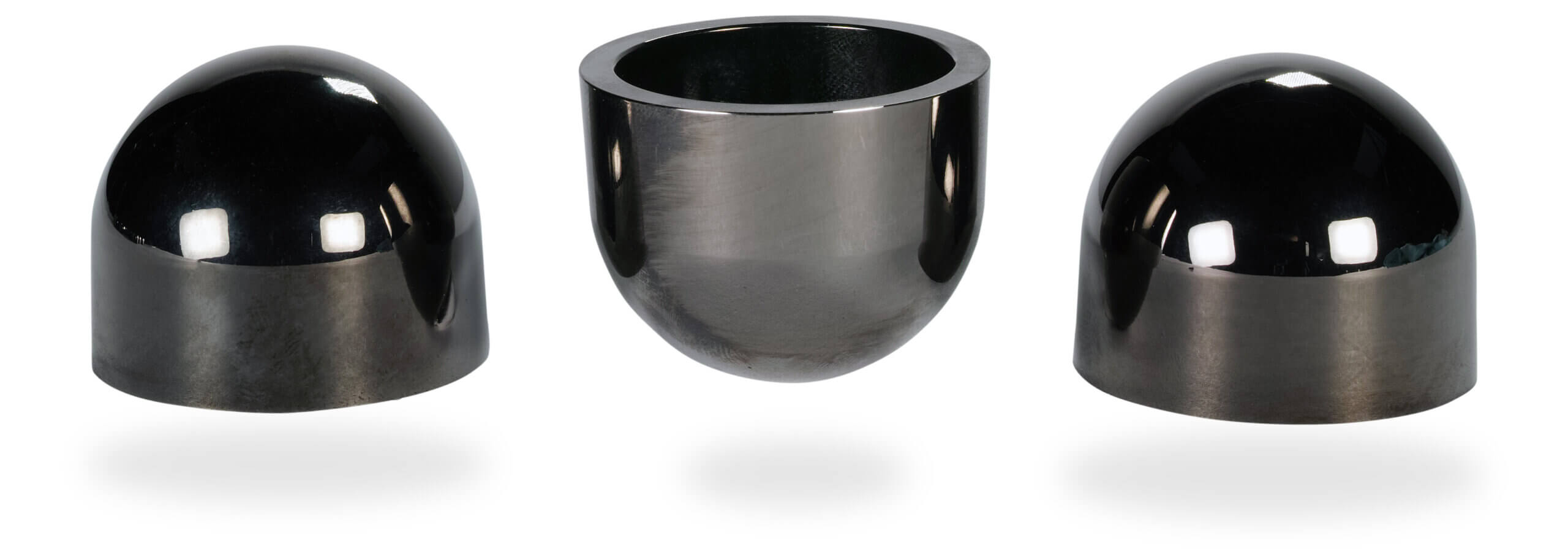 |
| Configuration: Two footers “Round Side Down,” one footer “Round Side Up”.
Sonic Result: Sharpened soundstage focus, surgical image placement, and faster, tighter bass transients. Best for: digital streamers, SR PowerCells, and solid-state gear where maximum articulation is desired. |
Configuration: Two footers “Round Side Up,” one footer “Round Side Down”’.
Sonic Result: An expansive, layered soundstage with holographic bloom and a more relaxed, liquid presentation. Best for: DACs, phono stages, and systems where you want to evoke the soulful warmth of the best tube designs. |
MiG 3.0 versus MiG 4.0
|
Resonator Metamaterials Field Integration Sonic Profile |
MiG 3.0
Uniform forged dome Single universal UEF layer Passive resonance behavior High resolution & focus |
MiG 4.0
Variable-wall CNC-machined resonator Triad of 3 distinct UEF Metamaterial formulations Voiced for ELF / ULF field integration (FEQ, LogiQ) Holographic “total-system” lock-in |
Wees de eerste om “Synergistic Research
MiG 4.0
Set of 3 footers” te beoordelen
Gerelateerde producten

Incl. 21 % TAX € 60.00
Beoordelingen
Er zijn nog geen beoordelingen.